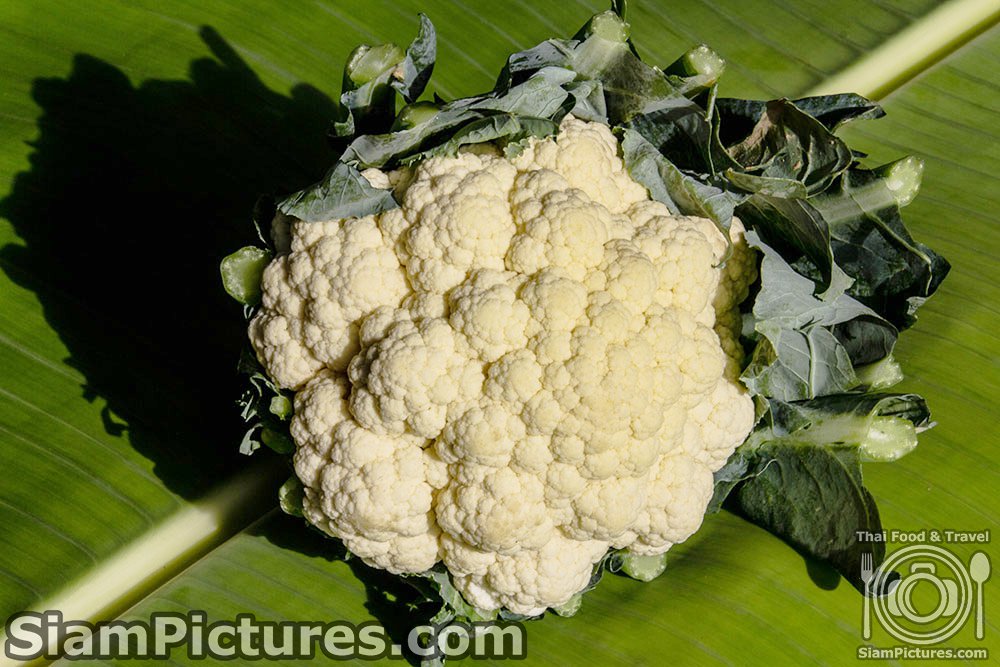
Cauliflower

Cauliflower

Cauliflower is a highly modified plant, with a very long history.

Its ancestry can be traced back to ancient Anatolia, in the region of the Black Sea also called Asian Turkey, where it has been grown for more than a 1000 years. In the 12th century, three varieties came to Spain. In the 16th century, they have spread to Genoa, and from there they came to France.

It spread throughout Europe in the mid-16th century where it became popular in France. Today Cauliflower is produced in big amounts in France, Italy, India, The United, and China.

There are hundreds of varieties if you combine the historic varieties and the commercial varieties there are used today. There are alone more than 80 north Americana varieties.

Cauliflower comes in different colors, white, green, purple. The different colors have different health properties.

The orange is one of the most delicious with its sweet and mild taste. Many of the people who do not like the white variety delicious, will like the orange.

The purple is properly the one with the most health benefits, and it can be eaten raw or only steamed for a short time.


The nutrient fact, below, is based on 100 gram of raw white Cauliflower.

Vitamins

Vitamin C, total ascorbic acid mg 48.2
Thiamin mg 0.05
Riboflavin mg 0.06
Niacin mg 0.507
Vitamin B-6 mg 0.184
Folate, DFE µg 57
Vitamin B-12 µg 0
Vitamin A, RAE µg 0
Vitamin A, IU IU 0
Vitamin E (alpha-tocopherol) mg 0.08
Vitamin D (D2 + D3) µg 0
Vitamin D IU 0
Vitamin K (phylloquinone) µg 15.5

Lipids

Fatty acids, total saturated g 0.13
Fatty acids, total monounsaturated g 0.034
Fatty acids, total polyunsaturated g 0.031
Fatty acids, total trans g 0
Cholesterol mg 0

Proximates

Water g 92.07
Energy kcal 25
Protein g 1.92
Total lipid (fat) g 0.28
Carbohydrate, by difference g 4.97
Fiber, total dietary g 2
Sugars, total g 1.91

Minerals

Calcium, Ca mg 22
Iron, Fe mg 0.42
Magnesium, Mg mg 15
Phosphorus, P mg 44
Potassium, K mg 299
Sodium, Na mg 30
Zinc, Zn mg 0.27


Similar Posts

  • Broccoli

    Broccoli originally called “Broccolo”. Broccoli was named after the Italian word “Broccolo”, that means cabbage sprout. Broccoli is an example of the crop there been developed over many hundred years. Broccoli originates from wild cabbage northern in the Mediterranean area, in Roman times. It spread out through Europe in the 14 century. It came to the USA…

  • Cane sugar

    Cane sugar is made from sugar canes. Thailand is one of the worlds biggest producers of sugar canes. Sugar is believed to be one of the oldest ingredients with a track record dating back to 8000 BC Sugar is the same addictive as cocaine and we already have a craving for sugar as newborn. You…

  • Chinese Broccoli

    It is believed that Chinese Broccoli is a descendant of cabbage. The early Portuguese explorers first brought cabbage to Asia. Through years of breeding Chinese Broccoli have been developed from the cabbage the Portuguese had brought cabbage with them. Unlike broccoli where you only eat the head are you also eating the stems and leaf on…

  • Shiitake Mushroom

    Shiitake Mushroom is one of the healthiest foods on the planet. Shiitake mushrooms have been around since prehistoric times. For thousands of years, they have played a major role in traditional medicine all over Asia, where they are originated. As I will not give health advises, on my site, because I am not a doctor, I…

  • Carrot

    The carrot had a very long history before it became the carrot we know today. It appears it was the Moors who brought it to Europe via Spain in the 8th century, and from there it spread through Europe. The first carrots the Moors brought was purple. The carrots were originally grown for their seeds…

  • Palm Oil

    The nutrient fact, below, is based on 100 gram of palm oil. Vitamins Vitamin C, total ascorbic acid mg 0 Thiamin mg 0 Riboflavin mg 0 Niacin mg 0 Vitamin B-6 mg 0 Folate, DFE µg 0 Vitamin B-12 µg 0 Vitamin A, RAE µg 0 Vitamin A, IU IU 0 Vitamin E (alpha-tocopherol) mg…

Leave a Reply

Your email address will not be published. Required fields are marked *